The foundation of written expression
Everyday
Handwriting
Your handwriting is a unique expression of who you are. Explore the elements that shape every letter you write — from basic strokes to flowing sentences — and discover how awareness of form, spacing and rhythm can transform the way you put pen to paper.

Understanding Handwriting
More Than Just Words on a Page
Handwriting is a personal, physical and deeply human form of communication.
When you write by hand, you engage your mind and body in a way that no other form of communication replicates. Each stroke carries traces of your personality, mood and physical habits. The way you form an "a," the angle at which your letters lean, the space you leave between words — these small decisions combine to create something uniquely yours.
Handwriting is not simply about neatness or legibility, though both are valuable. It is about the relationship between thought and movement, between intention and expression. When you write with awareness — noticing how your pen moves across the page, how your letters connect and how your words sit on a line — the experience of writing itself becomes richer and more satisfying.
Throughout history, handwriting has served as the primary vehicle for recording ideas, conducting correspondence, keeping journals and transmitting knowledge. Even in our digital age, the handwritten word retains a warmth and authenticity that printed text cannot replicate. A handwritten note, a personal journal entry, a carefully addressed envelope — these carry emotional weight that resonates with both writer and reader.
Whether you are revisiting your handwriting after years of typing or picking up a pen with fresh curiosity, exploring the fundamentals of penmanship can open up a rewarding and meditative practice.

The Six Principles
What Shapes Your Handwriting?
Understanding these six interconnected elements can help you see your handwriting in a new light.
Letter Formation
Every letter in the alphabet is constructed from a handful of basic strokes: straight lines, curves, loops and ovals. Understanding how these strokes combine to form each character is the foundation of clear, recognizable handwriting. When you pay attention to where each stroke begins and ends, your letters become more consistent and easier to read.

Proportion
Proportion refers to the relative height, width and visual balance of each letter. The x-height (the height of lowercase letters like "a" and "o"), the length of ascenders (as in "b" and "d") and descenders (as in "p" and "g") all work together. Consistent proportions give handwriting an orderly, harmonious appearance.

Spacing
Spacing operates at three levels: between individual letters within a word, between separate words on a line, and between successive lines of text. Consistent, even spacing creates a smooth visual texture that makes writing easy to follow. When spacing is uneven, even well-formed letters can appear disorganized or difficult to read.

Slant
The angle at which your letters lean is a major contributor to the visual personality of your handwriting. Some writers naturally produce an upright style, while others develop a forward or backward incline. There is no single correct slant — what matters most is maintaining a consistent angle throughout your writing, which creates visual coherence and flow.

Pressure
The amount of force you apply while writing affects the thickness of each stroke, the flow of ink from your pen and your physical comfort during longer writing sessions. Many writers press harder than necessary, leading to hand fatigue. Lighter, more controlled pressure often produces smoother lines and allows the pen to move more freely across the page.

Rhythm
Rhythm is the repeated, flowing movement that develops when you write multiple letters and words in sequence. It emerges naturally from consistent stroke patterns and well-practised letter transitions. When your writing has rhythm, individual letters connect smoothly and the act of writing itself feels more natural, almost musical in its cadence.

Handwriting Styles
Exploring Different Writing Styles
From printed block letters to flowing cursive and everything in between.

Print Handwriting
Print handwriting, sometimes called manuscript or block lettering, uses individual unconnected letters. Each character is formed separately, making this style highly legible and accessible. It is often the first writing style learned and remains a practical choice for forms, labels and clear communication where maximum readability is required.
- Each letter stands independently
- Emphasis on clarity and legibility
- Consistent height and spacing

Cursive Writing
Cursive writing connects letters within each word using flowing, continuous strokes. This style developed as a way to write more efficiently — once the pen touches the page, it moves through multiple letters before lifting. Cursive can feel meditative and rhythmic once the connecting strokes become natural, and it gives writing a distinctive personal character.
- Letters flow into one another
- Develops natural rhythm and speed
- Strongly personal and expressive

Italic Handwriting
Italic handwriting blends the clarity of print with some of the efficiency of cursive. Letters have a slight forward slant and simplified forms, with selective connections between certain letter pairs. Many writers find italic a comfortable middle ground — more expressive than print but more structured than fully connected cursive.
- Combines elements of print and cursive
- Elegant forward slant
- Selective, natural letter connections
Your Practice Journey
From Strokes to Sentences
A step-by-step path through the building blocks of handwriting.
Basic Strokes
Begin with the fundamental movements: straight downstrokes, upstrokes, curves, loops and ovals. These repeated motions train your hand to move with control and consistency. Practise each stroke in rows, focusing on uniformity rather than speed.

Individual Letters
Apply your stroke practice to forming individual uppercase and lowercase letters. Work through the alphabet in groups of similarly constructed characters. Pay attention to proportion, starting points and the direction of each stroke.
Words & Connections
Once individual letters feel comfortable, begin combining them into words. Focus on letter spacing, word boundaries and — if practising cursive — the connecting strokes that link one letter to the next. Short, familiar words make the best starting material.

Sentences & Paragraphs
Bring everything together by writing complete sentences and short paragraphs. This is where rhythm and flow develop. Pay attention to line spacing, margin alignment and overall page composition. Let the experience of writing become meditative and enjoyable.

Practical Guidance
Tips for Comfortable Writing
Small adjustments to posture and grip can make a meaningful difference.
Pen Grip
Hold your pen between the thumb and index finger, resting it on the middle finger. The grip should be firm enough to maintain control but relaxed enough to avoid tension. Many writers benefit from holding the pen slightly further from the tip than they might instinctively.
Posture & Position
Sit with your back supported and your feet flat on the floor. Position your paper at a slight angle — roughly 30 to 45 degrees — so that your writing arm moves naturally across the page. Movement should come from the forearm and shoulder, not just the fingers.
Paper Placement
Keep the paper anchored with your non-writing hand. As you write, slide the paper upward rather than moving your hand to an uncomfortable position at the bottom of the page. This small habit helps maintain consistent letter angles and reduces strain.
Pace & Patience
Write slowly and deliberately, especially when exploring new styles or practising individual letters. Speed develops naturally with repetition. Short, focused practice sessions of 10 to 15 minutes tend to be more effective than occasional lengthy sessions.
Choosing Your Tools
Pens & Paper for Handwriting
The right combination of pen and paper can transform the feel of your writing.
Selecting a Pen
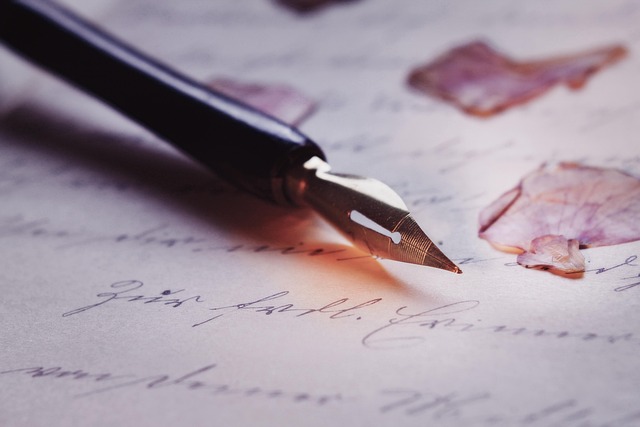
The pen you choose matters more than you might expect. A comfortable, well-balanced pen allows you to write for longer periods without fatigue. For everyday handwriting practice, any pen that feels natural in your hand is a good starting point.
Fountain pens offer a smooth writing experience and respond to pressure, creating natural line variation. Many writers find them especially satisfying for extended practice.
Gel pens provide consistent ink flow and come in many tip sizes. A 0.5mm or 0.7mm gel pen can be a practical, accessible choice for everyday handwriting.
Pencils are excellent for initial practice. They allow you to erase and refine, and the graphite responds sensitively to changes in pressure.

Choosing Paper
Paper plays a larger role than many writers realize. The surface texture, weight and ruling all influence how your pen interacts with the page and how your handwriting appears.
Ruled paper provides visual guidelines that help maintain consistent letter height and baseline alignment. Wide-ruled paper is helpful for practising larger letterforms.
Grid paper adds vertical reference points, making it easier to maintain consistent letter width and spacing. Dot-grid notebooks offer a subtler version of this structure.
Smooth, heavier paper (80gsm or above) works well with fountain pens and liquid inks, resisting bleed-through and feathering. This allows your writing to appear crisp and well-defined.
Practice Exercises
Exercises to Try Today
Simple, focused activities to build awareness and develop your handwriting.
Warm-Up Spirals
Fill a line with continuous clockwise spirals, then a line with counterclockwise spirals. This loosens your wrist and forearm, preparing the muscles used for writing. Keep the spirals as uniform as possible.
Letter Groups
Practise letters in groups based on their shapes: round letters (a, c, d, g, o, q), straight letters (i, l, t, f), hump letters (m, n, h, b, p) and descender letters (g, j, p, q, y). This reveals the underlying patterns.
Pangram Practice
Write pangrams — sentences that contain every letter of the alphabet. "The quick brown fox jumps over the lazy dog" is the most well-known example. This exercises every letter form in context.
Copy a Favourite Passage
Choose a short passage from a book, poem or song lyric and copy it by hand, slowly and deliberately. Focus on maintaining consistent spacing, slant and letter height throughout the entire passage.
Write a Letter
Write a letter or note by hand to someone you know. The act of writing for a real recipient adds purpose and intention to the process, and the recipient will likely appreciate the personal touch.
Before & After Comparison
Write a standard paragraph at your natural speed, then rewrite it slowly with attention to form. Comparing the two side by side can reveal which specific elements differ most between your casual and careful writing.
Common Questions
Handwriting FAQ
Handwriting habits can be explored and adjusted at any age. The patterns your hand has developed over the years are deeply ingrained, but with conscious, regular practice you can become more aware of how you write and experiment with changes. Small, focused adjustments tend to be more sustainable than attempting to overhaul your entire writing style at once.
Short, consistent sessions tend to be more effective than occasional longer ones. Even 10 to 15 minutes of focused, deliberate practice can be valuable. The key is regularity rather than duration — writing mindfully every day or several times a week helps build muscle memory and awareness over time.
There is no single correct order. Print handwriting is often simpler to begin with because each letter is formed independently. Cursive builds on print by adding connecting strokes. Many writers find it helpful to feel confident with printed letterforms before exploring cursive connections, but both styles can be explored in parallel.
Different pens can influence how your handwriting looks and feels. A fountain pen responds to pressure and creates natural variation, while a ballpoint requires more pressure and produces a more uniform line. The most important criterion is comfort — choose a pen that feels good in your hand and allows you to write without strain.
Hand fatigue often results from gripping the pen too tightly or relying too heavily on small finger movements. Try holding the pen more gently and allowing larger arm movements to guide the pen across the page. Regular breaks during longer writing sessions can also help. If fatigue persists, experimenting with a different pen shape or thickness may improve comfort.
Consistency develops through awareness and repetition. Focus on one element at a time — start with maintaining a consistent slant, then work on uniform letter height, then spacing. Using lined or grid paper provides visual reference points. Writing slowly and deliberately at first helps your hand learn the movements that will eventually become automatic.
Continue Exploring
More to Discover
Explore related topics across the BW ESS ITALY SRL platform.

The Art of Calligraphy
Move beyond everyday handwriting into the structured, expressive world of calligraphic letterforms.
Explore
Words & Spelling
Explore written English through word structure, commonly confused spellings and practical language examples.
Explore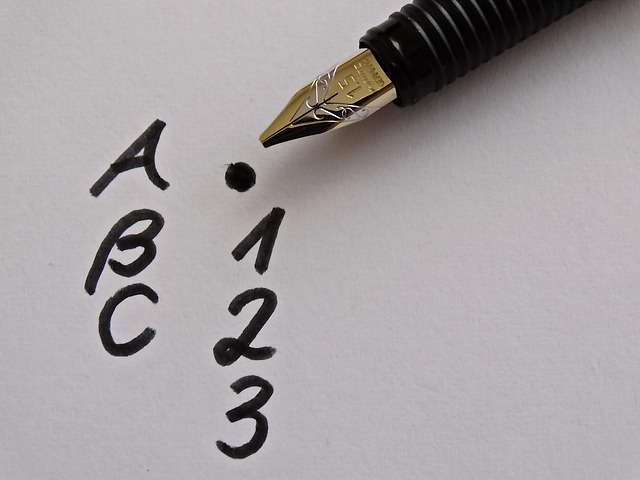
Pens, Ink & Paper
Understand how different writing instruments and surfaces influence the physical writing experience.
Explore